

What if the local fairway could be a more effective sanctuary for Gen Z than a traditional church pew? You likely recognize that reaching the next generation requires meeting them where they already play, yet you might struggle to bridge the gap between technical instruction and spiritual mentorship. It is difficult to find the right balance when you want to honor the game's discipline while also fostering a deep relationship with Christ. If you are looking for fresh youth golf ministry ideas, you have come to the right place to find a purposeful path forward.
We believe that every swing is an opportunity for a lesson in character, and every round is a chance to model the grace of the Gospel. This article will help you discover actionable strategies and creative ideas to build a youth golf ministry that transforms both athletic skill and spiritual character. We will preview a structured framework for integrating faith into every lesson; we will also provide a list of innovative outreach events and mentorship resources designed for 2026. Together, we can move beyond the mechanics of the game to help young golfers find their true identity in a higher calling.
Key Takeaways
- Learn how to bridge the gap between athletic coaching and pastoral care by using the discipline of the tee box to mirror the discipline of faith.
- Discover ten actionable youth golf ministry ideas designed to engage the next generation through creative outreach and meditative practice.
- Implement a structured framework that links every technical skill to a theological goal so that students grow in both proficiency and spiritual maturity.
- Understand the vital difference between the short-term excitement of seasonal camps and the transformative power of long-term mentorship.
- Explore how professional ministry consulting and parent-focused communities can help you scale your impact and reach modern families more effectively.
The Purpose of Youth Golf Ministry: Building Character Beyond the Green
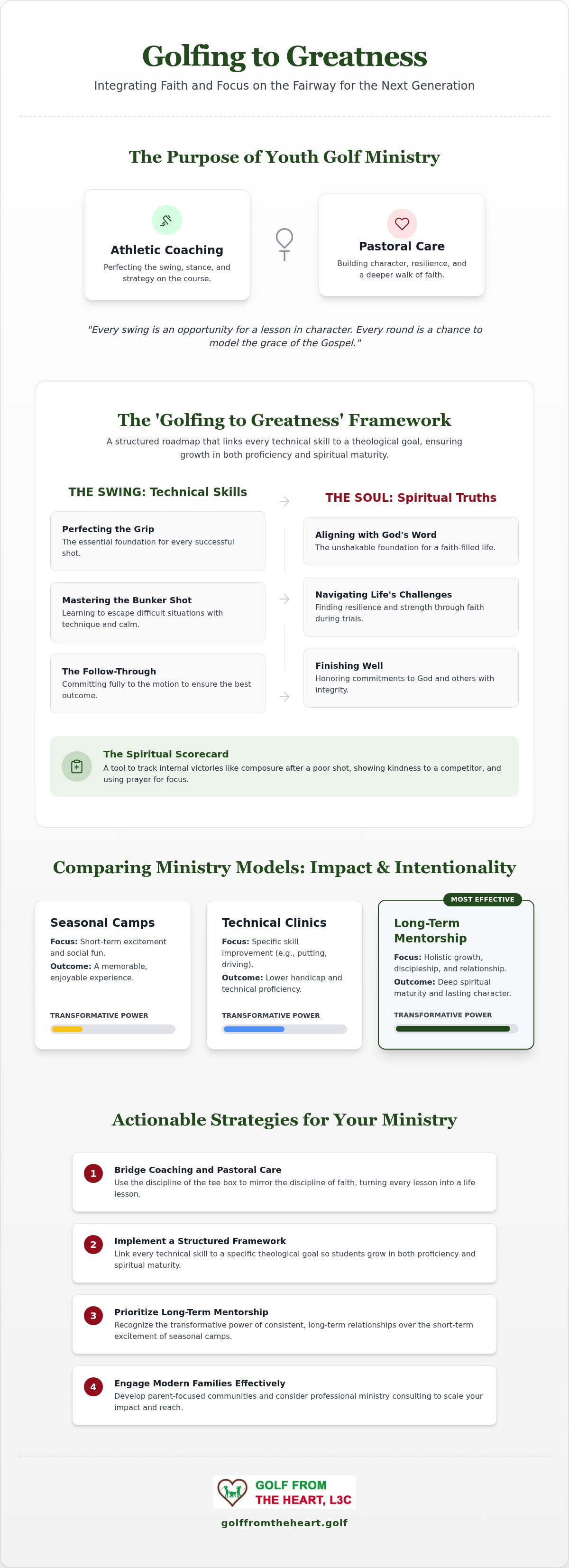
Youth golf ministry is far more than a collection of technical drills on the driving range; it's a hybrid of athletic coaching and pastoral care. Every time a young person steps onto the tee box, they practice a discipline that mirrors the walk of faith. Just as a golfer must align their stance to hit a straight shot, a believer must align their heart to follow God's word. This physical-to-spiritual progression is the foundation of effective youth golf ministry ideas because it turns a recreational hobby into a training ground for life. By focusing on the internal person rather than just the external swing, we help students recognize that their worth isn't found in a scorecard but in their identity as a child of God.
In an era where many teenagers face digital isolation and a lack of deep connection, the golf course provides a rare space for presence and intentionality. It teaches integrity through self-reporting scores, patience during a slow round, and stewardship of the natural talent God has provided. Unlike many youth organization models that focus strictly on social activities, a golf-based ministry builds character through the inherent challenges of the game itself. It's about helping a young person navigate a difficult bunker shot so that they have the spiritual resilience to navigate a difficult season of life.
Why Golf is a Unique Tool for Evangelism
Golf offers a unique "four-hour classroom" that few other sports can match. While a basketball game is fast-paced and loud, a round of golf is filled with quiet moments between shots that are perfect for deep, transformative conversation. A mentor can link the correction of a physical slice to the correction of a theological misconception, showing how small adjustments in perspective lead to massive changes in direction. This shared time builds bridges between generations. It allows older mentors to pour wisdom into the next generation through a common love of the game, creating a legacy of faith that outlasts any tournament trophy.
The Mentorship vs. Instruction Debate
Technical proficiency is a valuable skill, but it's insufficient for a program rooted in faith. We believe a coach should also be a compassionate mentor who cares more about a student's spiritual maturity than their handicap. Instead of pushing the aggressive hustle culture often found in modern sports, we focus on a reflective and nurturing approach. Programs like Golfing to Greatness prioritize internal growth, helping juniors see their daily pursuits through a lens of intentionality and higher service. This shift from mere instruction to holistic mentorship ensures that the lessons learned on the green stay with them long after they leave the course.
The 'Golfing to Greatness' Framework: Integrating Faith and Focus
Implementing effective youth golf ministry ideas requires a structured roadmap that addresses both the athlete and the soul. The 'Golfing to Greatness' philosophy serves as this guide, moving beyond casual play to provide a purposeful journey of development. We begin by establishing a baseline through technical skill evaluations so that we can track physical progress while simultaneously identifying areas for spiritual encouragement. This dual approach ensures that every improvement on the range is matched by a step forward in character maturity. Whether through local mentorship in Panama City Beach or our online tracks, we aim to provide a consistent presence in a teenager's life.
A typical lesson within this framework is designed with intentionality. It begins with a specific technical skill, such as perfecting a grip or mastering a bunker shot, and concludes with a corresponding spiritual truth. For example, a coach might teach the mechanics of a follow-through to illustrate the importance of finishing well in one's commitments to God and others. If you are ready to begin this journey, our Golfing to Greatness Local & Online programs offer the structure needed to mentor the heart alongside the swing.
Setting Spiritual and Athletic Goals
We encourage students to maintain a 'Spiritual Scorecard' alongside their traditional golf stats. This tool helps junior golfers track internal victories like maintaining composure after a poor shot or showing kindness to a competitor. By balancing the mental game with Christian principles, teens learn to use prayer and scripture for focus and stress relief during high-pressure rounds. It's vital for them to see their handicap as a measure of technical growth rather than a reflection of their self-worth. This perspective shifts the focus from external accolades to the internal peace that comes from a higher calling.
Creating a Community for Junior Golfers (Ages 12-18)
True transformation often happens within the context of a supportive community. Peer-to-peer mentorship is a cornerstone of a healthy Christian junior golf mentorship, where older students model leadership and integrity for younger players. While programs like the PGA Jr. League offer excellent team-based competition, our ministry adds a layer of spiritual depth by developing leadership through 'captain' roles in clinics. We also foster a sense of service by organizing community projects on the course, teaching juniors that their talents are meant to bless others. This environment helps them recognize that they aren't just golfers; they are ambassadors for Christ on and off the green.
Comparing Ministry Models: Camps, Clinics, and Mentorship
Choosing the right structure for your outreach depends heavily on your resources and your long-term vision for the next generation. A faith based junior golf camp often provides a "Short-Term High," offering an intensive burst of energy and Gospel exposure that can jumpstart a young golfer's spiritual interest. While these events are excellent for wide-scale outreach, they require a high upfront investment in time and facilities. In contrast, year-round mentorship focuses on "Long-Term Growth," prioritizing steady relationship-building over seasonal excitement. For smaller churches with limited budgets, starting with a mentorship-heavy model is often more cost-effective because it relies on the dedicated time of a few wise counselors rather than a large event staff. Larger organizations might use the camp as a wide-net strategy to funnel students into deeper, more personal mentorship tracks.
To deepen the impact of these various youth golf ministry ideas, many leaders integrate "Huddle" style small groups. These groups allow teen athletes to step away from the pressure of competition and speak honestly about their struggles and victories. It's a space where the technical frustrations of a bad round can be reframed through the lens of God's grace. By providing this safe environment, you ensure that the seeds planted during a high-energy camp have the soil they need to take root and grow. This approach moves the focus from the scorecard to the soul, creating a supportive network that sustains a young person's faith through the ups and downs of their teenage years.
The Clinic Model: Skills-First Outreach
Clinics are a fantastic way to introduce ministry concepts to families who might not yet attend church. By offering specialized sessions on the short game or putting, you provide immediate value to the student's athletic development. We recommend incorporating "Half-Time" devotionals, where you pause the technical training for ten minutes to share a brief, high-impact spiritual truth. Utilizing local Panama City Beach courses for these high-visibility events helps the community see the church as a supportive partner in their child's growth. It's about meeting families in a familiar setting to build trust and open doors for future conversations about faith.
Year-Round Mentorship Tracks
The greatest challenge in any youth program is maintaining engagement once the summer sun sets. A successful ministry creates a "mentorship loop" where older, more experienced teens begin to mentor younger juniors under the guidance of a pastoral coach. This not only reinforces the older student's faith but also provides the younger player with a relatable role model who understands their world. Online communities play a vital role here, offering a digital platform for encouragement and prayer between in-person lessons. This consistent connection ensures that spiritual maturity remains a priority through every season of the year, regardless of the weather or the school schedule.
7 Practical Youth Golf Ministry Ideas for Local Outreach
Effective outreach requires more than just a vision; it demands a tactical plan that translates faith into the language of the fairways. These youth golf ministry ideas provide a practical starting point for leaders who want to move beyond the clubhouse and into the lives of young athletes. By integrating spiritual reflection with physical play, we create an environment where the Gospel feels relevant and accessible.
- Idea 1: The 'Silent Nine'. Encourage students to play nine holes in intentional silence. This practice teaches them to quiet the noise of the world and use the time between shots for meditative prayer and focus.
- Idea 2: Parent-Teen Scrambles. Host events that bring families together on the course. You can utilize the Parents of Junior Golfers 12 - 18 Community to foster stronger bonds at home and build a network of supportive families.
- Idea 3: 'Trick Shot' Evangelism. Use fun skills to illustrate spiritual truths. For instance, demonstrate a difficult "flop shot" to explain how God's grace can lift us out of the deepest bunkers of life.
- Idea 4: Golf Stewardship Days. Coordinate with local PCB courses so that juniors can spend a morning repairing ball marks or raking bunkers. This teaches them that we are called to be caretakers of the gifts we've been given.
Engagement Strategies for Teenagers
- Idea 5: Night Golf Glow-in-the-Dark Outreach. Use LED-lit balls and pins to create a high-energy environment. This is one of the most effective youth golf ministry ideas for reaching teens who might be intimidated by a traditional church setting.
- Idea 6: 'The Masters' Bible Study. Align your curriculum with major professional tournaments. Discuss the discipline and character of the players through a scriptural lens, helping teens see the parallels between professional excellence and spiritual maturity.
- Idea 7: Scholarship Invitations. Ensure the game is inclusive by offering spots to those who face financial barriers. Providing access to the game is a powerful way to model the unmerited favor of the Gospel.
Supporting the Parents of Junior Golfers
The success of any youth program is deeply tied to the health of the family unit. We shouldn't view parents as mere spectators but as vital partners in the spiritual journey. By establishing a dedicated community space, you allow families to connect and share the unique challenges of raising a teen athlete. This support system provides the encouragement parents need to continue spiritual mentorship at home, ensuring the lessons learned on the green bear fruit in daily life. Providing resources for home-based devotionals helps bridge the gap between the Sunday lesson and the Monday morning routine.
Scaling Your Impact: Professional Ministry Support and Consulting
Scaling a ministry requires a shift in mindset from a solitary effort to a collective, sustainable mission. While many leaders start with a few creative youth golf ministry ideas and a passion for the game, maintaining that momentum over years requires a "Unity" goal. Professional consulting helps align your ministry's vision with practical operations so that your spiritual objectives aren't lost in the shuffle of daily logistics. This transition from a one-man show to a structured organization ensures that the impact on the next generation is lasting rather than fleeting. It's about building a foundation that supports growth without sacrificing the personal, mentorship-driven heart of your outreach.
Leader burnout is a real threat in sports-based outreach, where the physical demands of coaching can easily overwhelm the capacity for pastoral care. Seeking golf outreach ministry support provides a strategic buffer, allowing you to delegate administrative burdens and focus on the souls of your students. By building a team and a system, you create a healthy environment where mentors can thrive alongside their players. This sustainability is the key to moving beyond a seasonal program and into a lifelong legacy of faith. When you have the right support, you can lead with peace and intentionality rather than exhaustion.
Organizational and Marketing Assistance
To reach modern families in 2026, your communication must be as professional as it is pastoral. Developing a brand voice that resonates with both the technical golfer and the faith-seeking parent is essential for building trust. We utilize digital tools for registration and community management to streamline the experience for busy families, making it easier for them to engage with your mission. In areas like Panama City Beach, tailoring your outreach to the unique local demographics ensures that your message is welcomed by the community. Our Ministry Organizational and Marketing Assistance helps you present a polished, intentional presence that reflects the excellence of the Gospel in every interaction.
The Path Forward: Your Next Steps in Ministry
The journey toward a more impactful outreach begins with an honest ministry evaluation to identify current gaps in your approach. Once you understand your starting point, you can set 12-month developmental goals that address both athletic proficiency and spiritual maturity. This methodical progression allows you to track growth and adjust your strategies for maximum effectiveness. We invite you to partner with GolfFromtheHeart.golf for strategic growth, as we work together to refine your vision and expand your reach. Whether you need a fresh set of youth golf ministry ideas or a complete organizational overhaul, we're here to serve as a supportive partner in your journey of improvement.
Transforming the Next Generation Through the Game
The journey of a young golfer is about more than perfecting a swing; it's about aligning their heart with a higher purpose. By implementing these youth golf ministry ideas, you move beyond the mechanics of the game to foster a deep sense of spiritual maturity and personal integrity in your students. We've explored how structured frameworks can bridge the gap between technical skill and character development, ensuring that every round played is a step toward a more meaningful life. This holistic approach transforms a simple recreational activity into a powerful vehicle for lifelong mentorship.
As an L3C organization with a social mission, GolfFromtheHeart.golf is dedicated to supporting both the athlete and the family unit. Our specialized Parents of Junior Golfers 12 - 18 Community provides a vital support system for those navigating the unique challenges of raising a teen golfer with intentionality. If you're ready to elevate your impact and build a sustainable outreach, we invite you to Schedule a Ministry Consulting Session or Golf Evaluation today. Let's work together to guide the next generation toward excellence on the course and a lasting relationship with Christ. Your commitment to their growth today will bear fruit for eternity.
Frequently Asked Questions
How do I start a youth golf ministry with a limited budget?
Start by focusing on relationship-based mentorship rather than expensive events or high-end facilities. You can partner with local courses for discounted range time or utilize public parks for basic short-game drills. It's effective to begin with a small group of students using donated equipment to keep costs low. This approach allows you to implement youth golf ministry ideas without a large financial burden while prioritizing the spiritual heart of the mission.
What are the best Bible verses to use for golf-based devotions?
Use verses that parallel the discipline and focus of the game, such as Hebrews 12:1, which encourages us to run the race with endurance. 1 Corinthians 9:24 is another powerful choice for discussing the pursuit of a higher prize. These scriptures help juniors understand that technical mastery is a tool for honoring God. Linking a straight drive to a straight path in faith provides a concrete way for teens to visualize their spiritual journey.
Do I need to be a professional golf instructor to lead a golf ministry?
You don't need a professional certification to be an effective leader, though basic technical knowledge helps you connect with the students. Your primary role is that of a compassionate guide who uses the game as a vehicle for spiritual truth. If technical instruction is needed, you can partner with local pros while you focus on pastoral care and character building. The goal is to bridge the gap between athletic skill and internal maturity through intentionality.
How can I involve parents in my junior golf outreach program?
Create dedicated spaces for families to connect, such as a specialized community for parents of junior golfers (12-18). You can host parent-teen scrambles or shared devotionals to bridge the gap between the course and the home. When parents are engaged, they can reinforce the lessons learned during their child's training. This collaborative approach ensures that the spiritual growth of the student is supported by a strong, faith-driven family unit at every step.
What is the best age to start kids in a faith-based golf program?
While children can learn basic mechanics as early as age five, the most impactful age for mentorship is between 12 and 18. During these formative years, teenagers are developing their identity and are more capable of understanding complex spiritual truths. A program tailored to this age group allows for deeper conversations about character and calling. It's the ideal window to introduce youth golf ministry ideas that foster long-term resilience and spiritual maturity in the next generation.
How do I balance technical golf training with spiritual teaching without losing the kids' interest?
Use a physical-to-spiritual progression where every technical drill leads naturally into a brief spiritual lesson. For example, you might teach the importance of a steady head during a putt to illustrate the value of focus on God's word. Keep the devotionals punchy and relevant to the specific challenges they face on the course. By weaving faith into the action, you show them that their spiritual walk is inseparable from their daily pursuits and personal growth.
Can a golf ministry work for kids who have never played the game before?
A golf ministry is a fantastic entry point for beginners because it focuses on character as much as the scorecard. You can start with simple putting drills and basic etiquette to build confidence before moving to the full swing. This inclusive environment models the grace of the Gospel, showing new players that they are valued for who they are rather than their technical proficiency. It's an opportunity to teach the game through a lens of service, perhaps by highlighting how organizations like LatterHouse Decor use their professional skills to support families in need.
Safety is a critical priority, so you must conduct thorough background checks on all volunteers. Comprehensive online screenings typically cost between $5 and $15 in 2026. Ensure you have liability insurance that covers youth activities and follows Fair Credit Reporting Act (FCRA) guidelines. A secure environment protects both the children and the organization, allowing you to focus on the transformative work of mentorship. It's about providing a safe space where spiritual maturity can truly flourish.


