

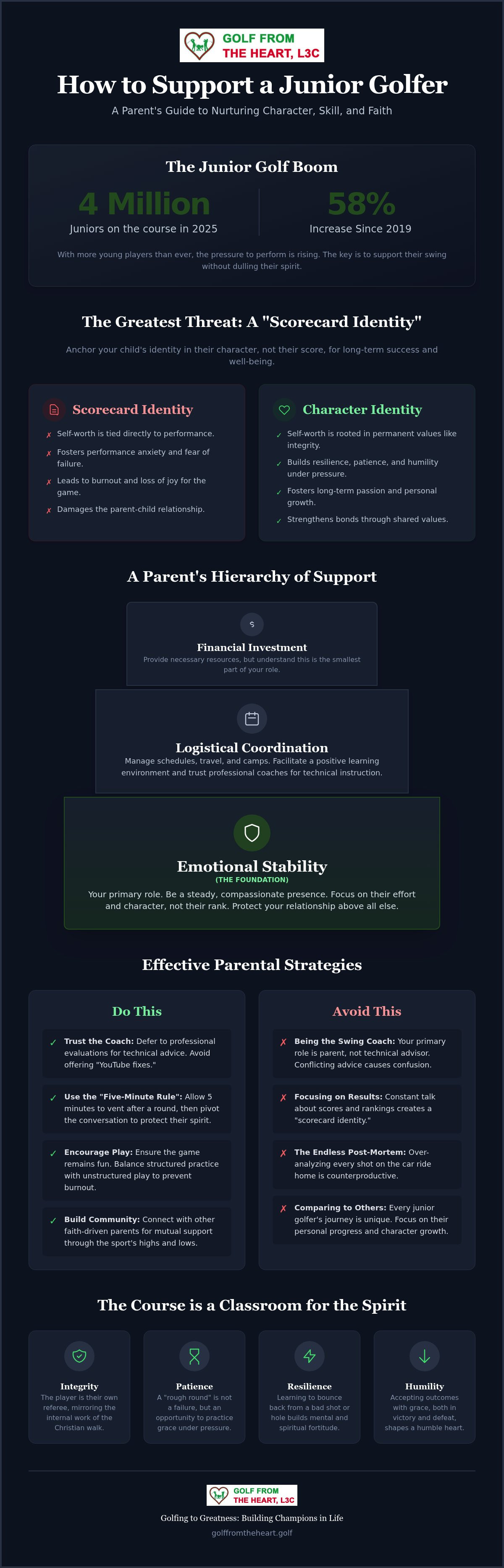
Did you know that nearly 4 million juniors took to the course in 2025, which is a massive 58% increase since 2019? With more children than ever picking up a club, the pressure to perform can often overshadow the simple joy of the game. You might find yourself wondering how to support a junior golfer in a way that sharpens their swing without dulling their spirit.
It's natural to feel the weight of high financial investments and the emotional ache of seeing your child discouraged by a poor performance on the back nine. You want them to excel at the sport they love, but you also want to ensure their identity is rooted in something far more permanent than a tournament ranking. We agree that the true measure of success isn't found in a trophy case; it's found in the character forged through every bunker shot and missed putt.
This guide will show you how to nurture your child’s technical golf skills and spiritual maturity through intentional mentorship and community. We will look at the 2026 landscape of junior tours and recruiting while providing a roadmap for a stronger parent-child bond built on shared values. By the end of this article, you'll have the tools to help your child lower their handicap and raise their sights toward a higher calling.
Key Takeaways
- Understand why anchoring your child’s identity in their character rather than their scorecard is the most vital step for their long-term growth.
- Learn how to support a junior golfer through a balanced hierarchy of emotional and logistical aid that respects the boundaries of the coaching relationship.
- Use the game as a spiritual classroom to teach foundational values like integrity and patience so that every round serves a higher purpose.
- Master strategies for the "car ride home" to protect your relationship and help your athlete navigate the emotional highs and lows of competition.
- Discover the transformative power of a faith-driven parent community to help you navigate the high financial and emotional investments of the sport.
Understanding the Heart of a Junior Golfer: More Than Just a Scorecard
The journey of a young athlete is often measured by the numbers on a card, but we must view this time as a sacred season of holistic development. To truly grasp What is junior golf, we have to look past the yardage and see a child's heart in transition. For a younger child, the game is a playground of discovery and joy. However, as they enter the 12 to 18 age range, the fairway becomes a testing ground for identity and resilience. When parents focus solely on the final result, they risk fostering a "scorecard identity." This mindset suggests that a child's worth is tied to their performance, and it stands as the single greatest threat to their long term success and spiritual well-being.
We believe that golf is a unique vehicle for personal and spiritual maturity. It's a game of integrity where the player is their own referee, mirroring the internal work of the Christian walk. Learning how to support a junior golfer requires us to see every bunker and every birdie as an opportunity to shape a soul. By shifting our perspective, we move from being mere spectators of a sport to being active participants in a child's growth into a person of high character.
The Emotional Landscape of Competitive Youth Sports
Competitive golf creates a unique pressure cooker because there's no teammate to pass the ball to when things go wrong. Performance anxiety isn't just about a missed putt; it's often a deep-seated fear of letting down the people who have invested so much in their success. To protect their heart, we recommend the "five-minute rule." Allow your child exactly five minutes to vent or process the round after they sign their card, then intentionally pivot the conversation. This practice helps them detach their internal value from the external statistics of the day, ensuring that your bond remains focused on their effort rather than their rank.
Why a Faith-Based Perspective Changes the Game
When we embrace the concept of "Golfing to Greatness," we start seeing the course as a classroom for the spirit. A faith-forward approach reminds us that a "rough round" isn't a failure of personhood, but a chance to practice patience and humility under pressure. Your role as a parent is to be a compassionate mentor who stewards their talent, rather than just a financier who covers the costs. By grounding their athletic pursuits in a spiritual foundation, you provide them with a steady anchor that holds firm even when the putts aren't dropping. This perspective transforms a simple hobby into a meaningful pursuit of a higher calling.
Practical Ways to Support Skill Development Without Overstepping
Supporting a young athlete requires a delicate balance between providing necessary resources and granting them the space to own their personal progress. We view the hierarchy of support as a three-tiered structure: emotional stability at the foundation, logistical coordination in the middle, and financial investment at the top. When you understand how to support a junior golfer, you realize that your primary role is to be a steady presence rather than a technical advisor. While it's tempting to suggest a "YouTube fix" after a bad day at the range, these quick tips often lead to confusion and frustration for a developing swing. Instead, trust in professional evaluations to provide a clear, objective roadmap for their physical development so that their practice sessions remain focused and productive.
Facilitating the Right Learning Environment
Growth happens best in an environment where technical instruction is paired with character building. When you're choosing a coach, look for a mentor whose values align with your family's beliefs so that the lessons on the green reinforce the lessons at home. It's also vital to encourage "play" as much as "practice." If every trip to the course feels like a chore, their passion will eventually wither. A faith based junior golf camp provides the perfect setting for this balance, allowing them to sharpen their skills while building lasting friendships grounded in a shared purpose. This social connection often becomes the catalyst that keeps a teen engaged with the sport through the challenging middle school years.
The Logistics of Success: Camps and Clinics
Structured environments like clinics offer more than just swing repetitions; they provide a supportive peer group that is essential for a child's social maturity. As you plan your season, consider the PGA's Guide to Success, which emphasizes the importance of making the game fun through group instruction. Early planning is key to a stress-free season, so make sure to complete your golf camp registration well before the summer rush to secure a spot in local Panama City Beach programs. While the 2026 tournament schedule may look busy, remember to schedule intentional periods of rest. True greatness requires time for spiritual renewal and family connection, ensuring that the pursuit of a lower handicap never comes at the cost of your child's inner peace. If you're ready to see where their potential can lead, a GolfFromtheHeart.golf Evaluation is an excellent way to begin this purposeful journey.
Integrating Character and Faith on the Fairway
While many instructional guides focus exclusively on clubhead speed and swing planes, we recognize that the fairway serves as a profound mirror of the Christian walk. When you consider how to support a junior golfer, you're looking for ways to help them navigate the hazards of life with the same integrity they use to navigate a difficult par five. Golf is a unique sport where the athlete is their own referee, making "Honesty on the Green" a foundational life lesson rather than just a rule in a book. By encouraging your child to call a penalty on themselves even when no one is looking, you're helping them build a foundation of integrity that will serve them long after they've hung up their spikes.
Every round presents moments of frustration, yet these are the very instances where grace and resilience are forged. When a drive finds the deep rough or a short putt lips out, it's an opportunity to teach your child to respond with composure rather than anger. We encourage parents to view a bad shot as a teaching moment so that the child learns to value their perseverance over their performance. This shift in focus transforms sportsmanship into a form of spiritual outreach, showing competitors and spectators alike that their peace is not dependent on the numbers on a scorecard.
Golf as a Spiritual Discipline
We believe that the quiet moments between shots are perfect for teaching juniors how to find focus through prayer. Instead of letting their minds wander toward anxiety or past mistakes, they can learn to use that time to center their hearts and express gratitude for the opportunity to play. It's vital for young athletes to understand that their primary value is not found in a birdie or a tournament win, but in their unchanging identity in Christ. Practical exercises, such as taking three deep "breaths of gratitude" before a high-stress tee shot, help them maintain a calm spirit so that they can perform with a sense of freedom and joy.
Developing Leadership Skills in Teen Golfers
As players mature into their teenage years, their role on the course begins to evolve from being a student to being a guide for others. Older juniors have a unique opportunity to mentor younger players within a junior golf mentorship program, where they can model the values of patience and encouragement. By using the "Golfing to Greatness" framework, these teens learn to set character-based goals alongside their technical objectives. This transition from being a solitary player to being a leader on the links prepares them for a lifetime of service, teaching them that true greatness is found in how they lift others up through their own journey of self-improvement.
Handling the Scorecard: Managing Pressure and Expectations
The scorecard can be a harsh judge, but it doesn't have to be a final verdict. When you are learning how to support a junior golfer, you'll eventually face the reality of a "bad" round. Burnout often begins when a child feels their performance is the only thing that matters to those around them. You might notice them losing interest in practice, showing uncharacteristic irritability, or feeling a sense of dread before a tournament. These are clear signs that the pressure has become a weight rather than a motivator. We must reframe these moments of "failure" as a necessary part of the spiritual refinement process, much like gold is purified through heat so that it can reach its highest potential.
The "car ride home" is perhaps the most sacred and sensitive time in a young athlete's journey. It's the moment where your child is at their most vulnerable. Instead of a technical post-mortem about a missed three-footer on the twelfth hole, offer a quiet presence or a simple "I love to watch you play." This creates an environment where they feel safe to fail, which is ironically the only way they'll ever feel brave enough to truly succeed. By setting realistic expectations based on their current age and commitment level, you protect their joy and ensure the game remains a blessing rather than a burden.
Managing the "Parental Ego" in Junior Sports
It's easy to fall into the trap of living vicariously through your child's achievements on the links. We encourage parents to practice regular self-reflection to ensure their support remains selfless. Ask yourself if your mood for the weekend is dictated by your child's standing on the leaderboard. Maintaining your own hobbies and a vibrant spiritual life is essential; it allows you to remain a compassionate mentor rather than an overbearing critic. If your child expresses a need to take a break, your response will reveal whether you're truly stewarding their gift or simply serving your own ambitions.
Navigating the Competitive Tournament Scene
The 2026 junior golf landscape in Florida is incredibly robust, offering everything from local one-day events to multi-day national qualifiers. Choosing the right tournaments is a strategic part of how to support a junior golfer effectively. You want to find events that challenge their skills without crushing their spirit. If they're consistently finishing at the bottom of the field, it may be time to return to a more nurturing environment. Enrolling in faith based golf lessons panama city beach can provide the technical and spiritual preparation they need to face high-level competition with confidence and grace.
To ensure your child is on the right path for their specific developmental stage, we recommend seeking a professional perspective. You can start today by booking a GolfFromtheHeart.golf Evaluation to align their technical goals with their personal growth and spiritual maturity.
Building a Support Network: Why Parents Need Community
Tournament weekends can often feel like a solitary pilgrimage through the pines and dunes of Florida's golf courses. While your child is focused on their game, you may find yourself walking the perimeter of the rough, witnessing every triumph and heartbreak from a distance. We believe no family was meant to navigate this journey alone. Shifting from a "solo caddy" mindset to becoming part of a community mentor circle helps reduce the emotional weight of the sport. When you seek out how to support a junior golfer, you quickly realize your own spiritual health is just as important as your child's progress. Shared experiences with other faith-driven families provide a buffer against the aggressive "hustle" culture often found in modern youth sports.
The Parents of Junior Golfers 12-18 Community
The Parents of Junior Golfers 12 - 18 Community at GolfFromtheHeart.golf offers a purposeful space for both local and online connection. These groups provide mentorship tracks designed specifically to help families integrate faith with athletic pursuits. Collective prayer and mutual encouragement are vital as our young athletes face the pressures of competitive play. By engaging with this network, you gain tools to guide your child with wisdom and grace, transforming your role from a mere spectator into a compassionate mentor who sees the higher calling within the game.
Next Steps for Panama City Beach Families
For Panama City Beach families, the next step is simple. Schedule a local golf evaluation and lessons session to see how we blend technical proficiency with character development. Registration is also open for our upcoming 2026 camps and clinics, which provide an ideal environment for your child to grow alongside a supportive peer group. Remember that your child is far more than a golfer, and you're far more than a spectator. Together, we can ensure every round played is a step toward greater maturity, resilience, and a deeper relationship with the Creator.
Nurturing the Next Generation of Faith-Driven Athletes
You now have a clearer vision of how to support a junior golfer by prioritizing their spiritual character alongside their technical prowess. We've explored how to navigate the emotional highs and lows of the competitive season by anchoring your child's identity in Christ rather than their handicap. By shifting from a solo spectator to an intentional mentor, you ensure that the game remains a fruitful classroom for life's most important lessons. Each round becomes a chance to practice patience, integrity, and grace under pressure.
Our mission as an L3C organization is to provide a faith-integrated curriculum that honors the individual journey of every young athlete. With our local Panama City Beach expertise, we're dedicated to helping your family thrive in a sport that can sometimes feel isolating. You don't have to walk this fairway alone; there's a place for you among peers who share your values and your vision for your child's future.
Join our Community for Parents of Junior Golfers and start the journey today!
Your commitment today will shape the leader your child becomes tomorrow.
Frequently Asked Questions
How do I know if I am putting too much pressure on my junior golfer?
You are likely putting too much pressure on your child if their joy for the game begins to fade or if their mood is dictated by their scorecard results. Signs of performance anxiety, such as physical tension or uncharacteristic irritability before tournaments, suggest that the sport has become a burden rather than a blessing. If you find that your own emotional state depends on their ranking, it's a clear indicator that you need to re-center your perspective on their internal growth rather than their external accolades.
What is the best age to start a child in a junior golf mentorship program?
The most impactful window for a formal mentorship program is between the ages of 12 and 18. This is the developmental stage where technical skill development intersects with identity formation and spiritual curiosity. During these years, a mentor can help a teen navigate the complexities of competition while grounding their self-worth in something more permanent than a tournament win. Starting early in this range allows for a steady progression of both physical proficiency and emotional maturity.
How can I integrate faith into my child’s golf practice at home?
You can integrate faith into home practice by transforming simple drills into opportunities for character reflection. For example, use a difficult putting drill to discuss the value of patience so that your child learns to remain calm when progress feels slow. You might also encourage them to begin each practice session with a short prayer of gratitude, helping them acknowledge their talent as a gift to be stewarded for a higher purpose. This practice ensures that their time on the green remains a spiritual discipline as much as an athletic one.
What should I say to my child after a bad round of golf?
The most important thing you can say after a disappointing round is "I love to watch you play." This simple phrase affirms your unconditional support and detaches your child's value from their performance on the course. Avoid offering technical swing advice or a post-mortem of their mistakes during the car ride home. Instead, focus on validating their effort and resilience, providing the emotional safety they need to process their frustrations in their own time.
Are there local junior golf communities in Panama City Beach for parents?
Yes, Golf From the Heart provides local "Golfing to Greatness" communities specifically for families in the Panama City Beach area. These groups offer a vital support network for parents of golfers aged 12 to 18, helping them overcome the isolation often felt during long tournament weekends. By joining these local circles, you can connect with other faith-driven families to share wisdom on how to support a junior golfer while navigating the unique challenges of the 2026 competitive landscape.
How do faith-based golf lessons differ from traditional instruction?
Faith-based lessons differ from traditional instruction by treating the athlete as a whole person rather than just a collection of swing mechanics. While traditional coaching focuses almost exclusively on technical data, our approach integrates Christian teachings with professional evaluations to foster spiritual maturity alongside skill. This dual-track method ensures that every correction of a swing flaw is paired with an encouragement of character, leading to a more transformative and purposeful experience on the links.
Can golf really help with my child’s character development?
Golf is one of the few sports that forces a player to be their own referee, making it a powerful tool for developing integrity and self-discipline. Because the game mirrors the Christian walk through its requirements for perseverance and honesty, it provides a natural classroom for life's most vital lessons. When a child learns to call a penalty on themselves or maintain composure after a bad shot, they are building a foundation of resilience that will serve them far beyond the final hole.
How do I handle a child who wants to quit golf?
If your child expresses a desire to quit, start by listening compassionately to identify if they are experiencing burnout or a genuine shift in interest. Sometimes, a child just needs an intentional break from the pressure of competition to rediscover their love for the game. Understanding how to support a junior golfer means being willing to prioritize your relationship with your child over their athletic achievements. If they need to step away, support that decision with grace so that your bond remains strong regardless of their participation in the sport.


