

Two or three structured practice sessions a week give beginners a steady rhythm for learning; a focused 60-minute golf practice plan for beginners can cover setup, putting, chipping or pitching, and range work. You don’t need to spend every session hitting ball after ball. A clear purpose for each part helps you build sound habits and practice with patience.
It’s easy to wonder whether to spend limited practice time on the putting green, short-game area, bunker, or range. This golf practice plan for beginners gives you a practical one-hour format, explains how often to practice, and shows how to divide time among key skills. You’ll also learn how to adapt the plan when you have less time, so each session supports steady progress in your game and practice habits.
Key Takeaways
- Build putting confidence by practicing both start line and distance control, then track how consistently your putts finish near the hole.
- Use chipping, pitching, and bunker work to prepare for the shots that make getting onto the green and saving strokes more manageable.
- Make range practice purposeful: reset between shots, vary clubs, and give each swing a clear target or focus.
- Choose a repeatable weekly rhythm that fits your time, and let coaching and fellowship support growth in both your game and your faith.
Putting start line and distance control
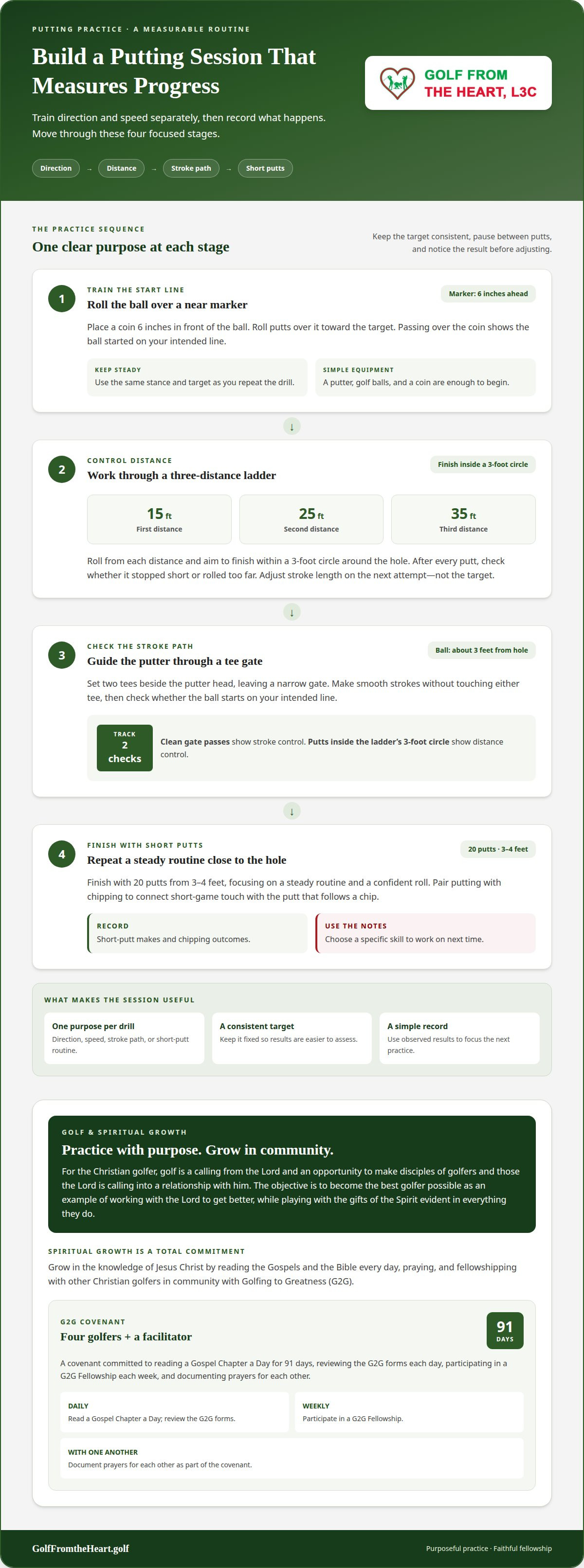
Practice direction and speed separately, then record your results to give each putting session a clear purpose. Pair putting with chipping to prepare for the course.
-
Train the Putting Start Line
Begin with a putter, golf balls, and a coin. Place the coin 6 inches in front of the ball, then roll putts over it toward the target. A putt passing over the coin shows the ball started on your intended line. Keep your stance and target consistent while you repeat the drill.
These simple items are enough for putting practice; tees can help with the gate drill. Keep the target consistent rather than changing it after every attempt, so it’s easier to assess your direction.
-
Control Putting Speed
Set up a distance ladder from 15, 25, and 35 feet. Roll putts from each distance, aiming to finish inside a 3-foot circle around the hole. This trains speed without making every attempt depend on sinking the putt.
A common mistake is striking each ball rapidly without checking where it finishes. Pause after every putt and notice whether it stopped short or rolled too far. Adjust your stroke length on the next attempt, not your target.
-
Set a Gate and Stroke Path
Place a ball about three feet from the hole. Set two tees beside the putter head, leaving a narrow gate for the putter to pass through. Make smooth strokes without touching either tee, then check whether the ball starts along your intended line.
Track progress by noting how often the stroke passes cleanly through the gate and whether putts finish within the ladder’s 3-foot circle. Set a realistic goal around cleaner contact and controlled distance, rather than expecting every putt to drop.
-
Practice Drills and Short Putts
Finish with 20 putts from 3-4 feet, focusing on a steady routine and a confident roll. For a balanced practice segment, include chipping and mostly putting from inside 10 feet. This connects short-game touch with the putts that follow a chip.
Give each drill a couple of focused repetitions before moving on. After practice, record short-putt makes and chipping outcomes. This simple record helps you choose a specific skill to work on next time.
Chipping, pitching, and bunker practice
Give each short-game drill one clear target, then use the results to guide your next session. Chipping, pitching, and sand shots each develop different contact and distance skills.
-
Improve Chipping Accuracy
Choose one landing spot and one club, then hit 10 chips toward the target. Record how many finish within one putter length, and note whether misses land short, long, left, or right. This shot dispersion shows whether your contact or aim needs attention.
Keep the landing spot fixed while trying the same shot again. Changing clubs and targets after every ball makes comparison harder. For pitching, work on awkward distances from 30-75 yards, hitting 8-10 wedge balls at each target distance. Adjust the target to suit your practice area.
-
Practice One-Handed Chipping
Start with 10 ball-free repetitions, then make 10 repetitions while hitting a ball. For right-handed golfers, hold the club with the left hand. Keep the left wrist firm and flat, and move the club with a rocking shoulder motion.
Notice whether the club brushes the ground consistently and the ball launches toward your intended landing area. If contact varies, slow your shoulder motion and repeat the ball-free rehearsal before trying another shot. This drill isolates the movement that helps control a simple chip.
-
Run Chipping Contact Drills
Use one landing spot and one club for a focused chipping challenge. After 10 shots, examine the pattern: repeated short finishes suggest a different issue than shots scattered left and right. Record the results so the next practice session has a specific purpose.
Include bunker work as a separate task, since sand shots require their own feel. A short-game routine can devote 15 minutes to sand practice. Then return to pitching or chipping and check whether the same steady contact carries across different lies.
For junior golfers, parents can explore a Parents of Junior Golfers 12 - 18 Community as they build purposeful practice habits.
Is going to the driving range once a week enough?
Yes, a weekly driving-range session can help, especially when each ball has a purpose. For steadier progress, work toward two or three structured practice sessions per week.
-
Practice Ball Flight at the Range
Choose one club and one ball-flight goal, such as starting the ball toward a distant target. Before each shot, reset your stance, grip, and alignment. Swing, then observe the result: note the starting direction and whether the ball curved. This routine helps you assess your technique instead of simply counting successful shots.
Change only one swing thought at a time. For example, focus on balanced contact before adjusting your swing path. Reset deliberately between balls so each repetition is useful and you avoid rushed, nearly identical swings.
-
Add Targets and Challenges
Select a target before hitting, then judge each shot by its relationship to that target. Try Will’s Range Challenge by aiming at targets from 100 to 200 yards. Choose a club suited to the target and record whether the ball finishes short, long, left, or right.
Keep the challenge simple: use the same target for a small group of shots, then change the distance or club. Don’t treat the farthest target as the only measure of success. A clear target helps you practice control as well as distance.
-
Structure a Range Session
Use this 45-minute format: spend 5 minutes rehearsing grip and setup without a ball, then 15 minutes making half-swings for contact. Give full swings 15 minutes and keep one swing cue. Finish with 10 minutes of driver practice, using one start-line goal.
Follow the sequence instead of rushing straight to driving. The setup rehearsal establishes a repeatable stance, while half-swings let you focus on contact before adding a full motion. Keep your driver goal specific, such as starting shots toward one fairway target.
-
Manage Range Ball Counts
Hit 30-50 balls with a reset between shots instead of firing them rapidly. Change clubs or targets regularly, and avoid hitting the same club more than 5 times in a row. This gives each swing a fresh routine and makes ball flight easier to assess.
If you have 30 minutes per week, combine a range session, a range challenge, and one putting drill. A 60-minute session can fit nearly the full routine, with fewer range balls if needed. Choose the schedule you can repeat consistently.
A 60-minute practice plan
Schedule two or three structured practice sessions each week, balancing skill work with play when possible. During a one-hour session, check your setup first, then practice putting, short-game shots, and full swings in that order.
- Check fundamentals for 10 minutes. Rehearse grip, alignment, ball position, and posture before hitting balls. Use the same setup routine for a short iron and driver, so you begin each swing from a repeatable foundation. Finish by choosing one priority for the session, such as balanced contact or a reliable start line.
- Practice putting for 20 minutes. Spend the first part on start line, then work on distance control from longer ranges. For example, putt from 15, 25, and 35 feet, aiming to finish inside a 3-foot circle. Close by practicing short putts, using the same routine each time.
- Give chipping or pitching 15 minutes. Choose one landing spot and one club, then hit a small group of shots toward that target. Notice whether each ball finishes short, long, left, or right. This gives your short-game work a clear purpose and prepares you for the shots that follow missed greens.
- Use the final 15 minutes for range work. Begin with half-swings to find contact, then make full swings with one technique cue. Finish with driver shots aimed at a fairway target. Track the starting direction, not only the distance, and change clubs between attempts to keep each swing intentional.
Repeat this routine across the week, and adjust the weakest area rather than changing every drill. For help shaping a practice routine around your fundamentals and progress, build a focused golf practice routine.
GolfFromtheHeart.golf: Golf From the Heart Evaluation and Golf Lessons
GolfFromtheHeart.golf offers Golf From the Heart Evaluation and Golf Lessons for golfers seeking guidance with their game and goals. Choose lessons for skill-development support, or an evaluation to consider your next steps.
For Christian golfers, golf is a calling from the Lord and an opportunity to make disciples among golfers and those the Lord is calling into a relationship with him. The aim is to become the best golfer possible while working with the Lord to improve and showing the gifts of the Spirit in all you do.
Contact GolfFromtheHeart.golf to discuss an evaluation or golf lessons.
Let Your Practice Shape the Golfer You’re Becoming
A golf practice plan for beginners can be more than a schedule when you treat each session as a chance to grow with purpose. Bring patience to challenging shots, humility to habits that need attention, and gratitude for the opportunity to keep learning. Progress is not just a scorecard result; it also shows in how you respond to setbacks and encourage others on the course.
Choose one intention for your next session, then carry it with you from the first warm-up swing to the final putt. If you’d like guidance connecting your golf development with a deeper sense of purpose, contact GolfFromtheHeart.golf. Take your next step with care, and let each round help you grow in skill, character, and service.
Frequently Asked Questions
How often should beginners practice golf?
A golf practice plan for beginners can start with two or three structured practice sessions per week. If your schedule allows only one range visit, keep it focused and add shorter practice at home or around the green. A useful weekly rhythm can also include a day of play, giving you a chance to apply your practice decisions on the course. Consistency matters more than trying to fit every skill into one visit.
How often should beginners practice golf, and for how long?
Use a golf practice plan for beginners that schedules two weekly sessions of 30 to 60 minutes each, then adjust to what you can sustain. A short at-home session of 10 to 15 minutes can add repetition between visits, such as rehearsing a balanced swing without hitting a ball. If you have more time, play nine holes and notice which shots deserve attention during your next practice.
What are the best beginner golf drills for putting?
Try practicing putts from 5-10 feet to build confidence on putts that can matter after a missed green. For a separate challenge, work on putts from 10-20 feet and observe whether your pace leaves a manageable next putt. Keep a simple record of makes and misses from each distance. That gives your next putting session a clear focus without judging progress by one result.
What are effective beginner drills for chipping and pitching?
For pitching, work on awkward distances between 30 and 75 yards, and hit 8-10 balls toward each target distance. Pay attention to contact and the landing area, not only whether a shot finishes near the hole. After a group of shots, note whether the pattern tends to come up short or travel long. Use that observation to choose your next target.
How should beginners practice their full swing at the driving range?
Build a balanced swing with slow-motion rehearsals, noticing whether you stay centered and stable. Try the feet-together drill, then return to your normal stance while keeping that centered feeling. A brief pause at the top of your backswing can also help you notice your balance and timing through the transition. At a Panama City Beach range, focus on one swing cue instead of changing several movements at once.
What golf clubs and equipment do beginners need for practice?
Beginners can practice putting with a putter, golf balls, and a coin; two tees can be used for the putting gate drill. Chipping and pitching use a club such as a wedge, while range practice can include a short iron and a driver.


